
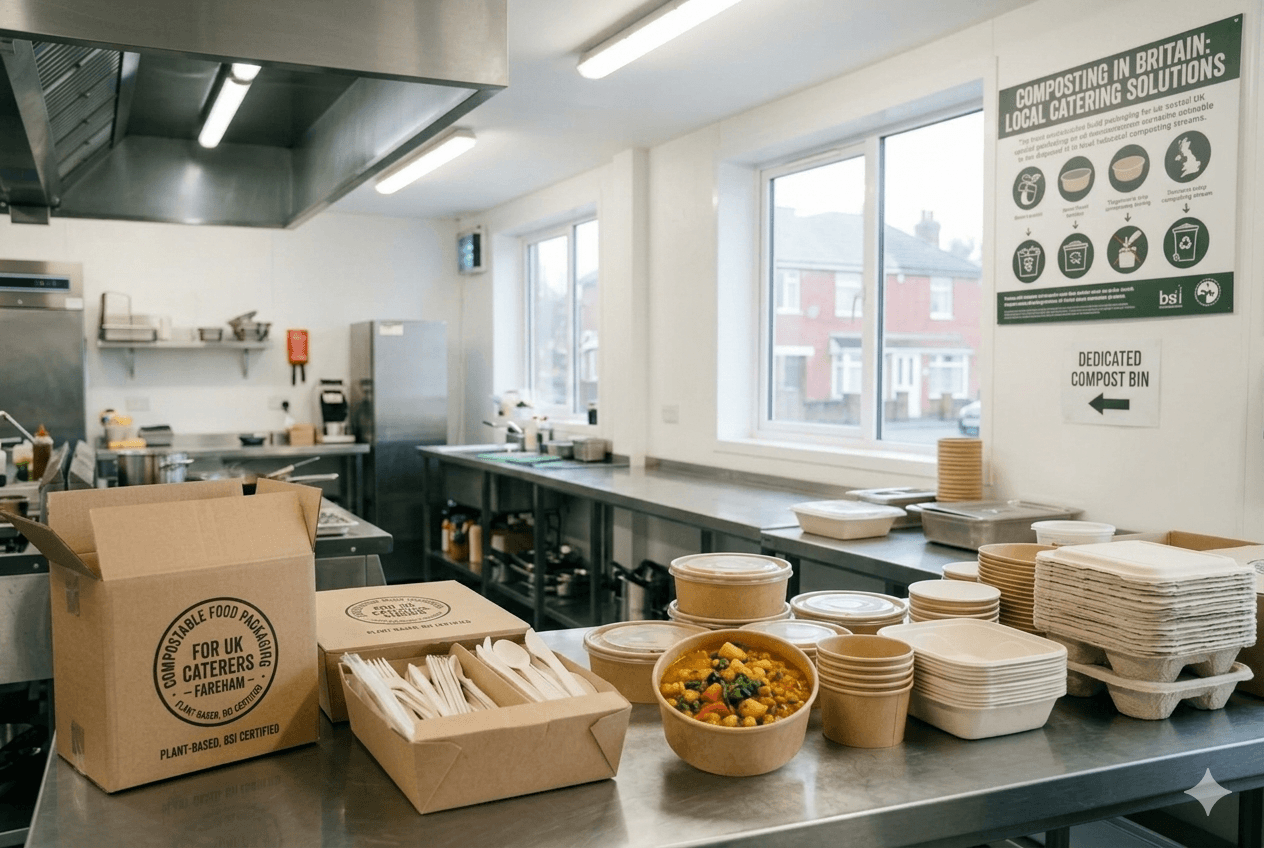
The Complete Guide to Compostable Food Packaging for UK Caterers
Compostable food packaging has moved from niche choice to operational necessity for UK catering businesses - and if you haven't already audited your disposables range, the time to act is now. With single-use plastic legislation tightening, procurement managers across restaurants, hotels, event venues and contract catering operations are switching to certified compostable alternatives at pace. This guide covers the materials you need to know, the certifications that matter, and the practical decisions you face when making the switch.
What Is Compostable Packaging and How Is It Different From Biodegradable?
The terms are often used interchangeably, but they are not the same thing, and the distinction matters if you're making compliance or marketing claims.
Biodegradable simply means a material will break down over time — but that could take decades, and it may release harmful residues in the process. Almost everything is technically biodegradable given long enough.
Compostable packaging meets a defined standard for breakdown within a specific timeframe and under specific conditions — either in industrial composting facilities (the majority of certified catering products) or at home. In the UK and Europe, the key certifications to look for are:
- EN 13432 — the EU/UK standard for industrial compostability. The most common certification on trade catering products.
- OK Compost Industrial (TÜV AUSTRIA) — widely recognised by UK composting facilities and local authority waste streams.
- OK Compost Home — for materials that break down in domestic compost, including unlined kraft paper products.
When sourcing from a supplier, always ask for the specific certification rather than accepting "compostable" as a label at face value.
The Main Compostable Packaging Materials Used in Catering
Understanding the base materials helps you match the right product to the application — particularly important when dealing with hot food, liquids or extended hold times.
Bagasse (sugarcane fibre): A byproduct of sugar production, bagasse is one of the most durable compostable materials available. Naturally grease-resistant, handles hot and cold food, microwave-safe in most cases. Ideal for hot food boxes, burger boxes and hinged clamshells. Discover our range of Bagasse Boxes.
Kraft paper / PLA-lined kraft: Uncoated kraft is home-compostable and ideal for dry food applications (sandwich bags, wrapping, baguette bags). PLA-lined kraft adds moisture resistance for soups, salads and hot cups, but requires industrial composting. Browse Kraft Boxes and Kraft Takeaway Bowls.
CPLA (crystallised polylactic acid): Used primarily for cutlery, stirrers and lids. Heat-stable to approximately 85°C, making it suitable for hot drinks and food service. Far more robust than standard PLA at service temperatures.
Moulded fibre / pulp: Egg-crate style moulded trays and plates. Excellent for cold food presentations, plant-based dishes and allergen-free service. Widely accepted in local authority food waste streams.
Compostable PBAT films: Used in compostable bin liners and some food wrap applications. Breaks down in industrial composting within 12 weeks.
Key Considerations for Procurement Managers Making the Switch
Switching your disposables range is not simply a like-for-like product swap. There are operational and cost factors to work through before placing your first bulk order.
Unit cost vs total cost of waste disposal: Compostable products typically carry a 15–30% price premium over equivalent conventional plastics. However, many operators reduce net costs by consolidating waste streams - compostable packaging and food waste can often go into the same collection, reducing landfill levy exposure.
Local waste infrastructure: Check with your local waste contractor before switching to PLA-lined products. If no industrial composting route is available in your area, PLA-lined packaging will end up in general waste - defeating the environmental purpose and wasting budget.
Temperature and hold time requirements: A bagasse hot box rated to 95°C is the right call for a restaurant main course. A kraft salad bowl is the right call for a deli counter. Map your applications before placing bulk orders.
Branding opportunities: Many catering businesses use the switch as an opportunity to order printed compostable packaging - reinforcing sustainability credentials with customers at point of service.
What UK Legislation Says (and What's Coming)
The UK's October 2023 single-use plastics (SUP) ban prohibited the supply of plastic plates, bowls, cutlery, balloon sticks and polystyrene food containers to consumers. This was a significant operational milestone, but broader regulations are expected to follow in coming years, covering additional categories of single-use plastic packaging used in food service.
The practical takeaway for procurement teams is this: building compost
Everything Catering Supplies stocks a comprehensive range of certified compostable packaging - from bagasse hot food boxes and kraft bowls to compostable bin liners. All products available with next-day delivery on orders placed before 4pm, free on orders over £75.
Browse Compostable & Eco Food Packaging →