
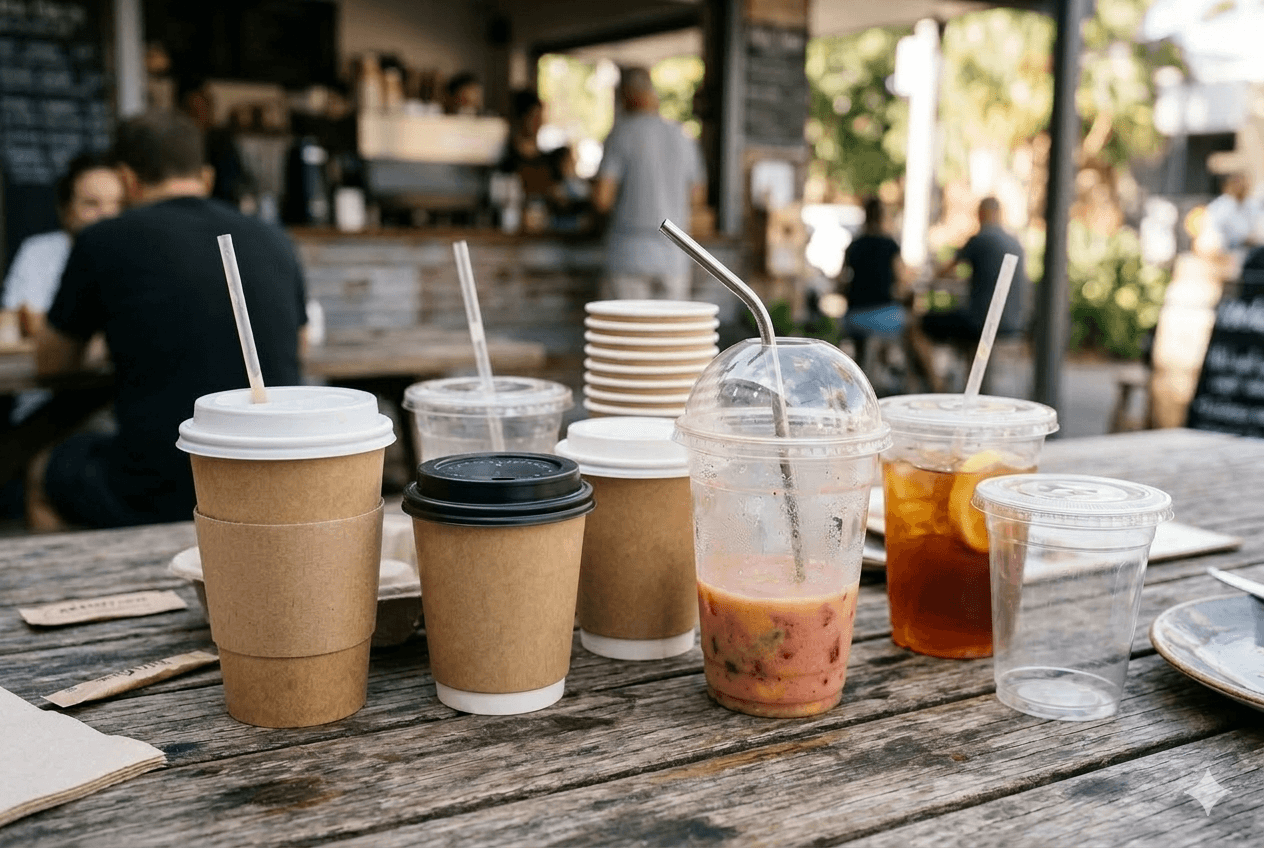
Paper Cups vs Compostable Cups vs Plastic Cups: Which Should Your Business Buy?
Choosing the right disposable cup for your operation affects everything from customer perception and waste stream logistics to unit costs and regulatory compliance. We supply all three cup types across hundreds of formats and sizes, which means we see procurement decisions made well, and badly, every day. This guide cuts through the noise.
Paper Cups Vs Plastic Cups Comparison
| Criteria | Standard Paper (PE-Lined) | Compostable Paper (PLA-Lined) | Clear Plastic (PET/rPET) | Compostable CPLA / Bagasse |
|---|---|---|---|---|
| Best For | Hot drinks: coffee, tea | Hot drinks with eco claims | Cold drinks, smoothies, shakes | Hot food pots, soups |
| Recyclable? | ⚠ Specialist only | ✗ Industrial compost only | ✔ Kerbside (rPET) | ✗ Industrial compost only |
| Compostable? | ✗ | ✔ EN 13432 certified | ✗ | ✔ EN 13432 certified |
| SUP Ban Impact | Not currently affected | Not affected - compliant alternative | ⚠ Expanded polystyrene banned; PET not yet | Not affected - compliant |
| Relative Cost | Lowest | Medium (+15–20% vs standard) | Low–Medium | Medium–High |
| Heat Resistance | Yes (hot drinks) | Yes (hot drinks) | Cold only | Yes (to ~95°C) |
| Lid Compatibility | Wide range available | Standard hot cup lids | Dome / flat lids | Matched CPLA lids |
Understanding the Different Paper Cup Constructions
Not all paper cups are created equal, and selecting the correct wall construction is critical for both performance and customer experience.
- Single wall: Standard construction, suitable for drinks consumed quickly or served in a cup sleeve. The most cost-effective option for high-volume cafés and takeaways where speed of service is paramount.
- Double wall: Built-in insulation means no sleeve required, better heat retention and improved hold comfort. The preferred choice for premium coffee shops and table-service venues presenting hot drinks to seated customers.
- Ripple wall: Three-ply construction with a rippled outer layer. Maximum insulation and a distinctive tactile quality that reads as premium. Higher cost per unit, but strong brand differentiation for specialty coffee operations.
- Compostable PLA-lined single wall: Functionally identical to standard single wall in use, but certified to EN 13432. The like-for-like switch for operators wanting to move to compostable without changing their service process.
Cold Cups: When to Choose Plastic and When to Choose Alternatives
For cold drinks, clear plastic (PET or rPET) remains the practical default for most operations, it provides the clarity customers expect for smoothies, iced coffees and cold-brew, and rPET is kerbside recyclable in most UK areas. Clear compostable cold cups exist but can appear cloudy and typically cost 25–40% more than equivalent rPET, making them difficult to justify unless your venue has an industrial composting collection in place.
For events and festivals, consider polycarbonate reusable cups alongside disposables. Our recyclable plastic pint and half-pint glasses are BRCGS-accredited and widely accepted by event licensing authorities.
Our Recommendation
For the majority of UK catering operations, the optimal solution is a standard PE-lined single wall cup for volume hot drink service, with a compostable PLA-lined option available to customers who request it. If your operation already has a composting waste contract, switching entirely to PLA-lined compostable hot cups is a straightforward, compliant upgrade. For cold drinks, rPET remains the best balance of performance, cost and environmental credibility. Always ensure lid compatibility is confirmed before bulk-ordering cups - mismatched lids are the most common costly mistake in cup procurement.
Browse our full range of single wall, double wall, ripple and compostable hot cups - all sizes in stock, available in case quantities with free next-day delivery on orders over £75.
Shop Disposable Cups & Lids →